

Consultation Planning
Build your consultation around the reasons for a proposed sequence, then decide whether your travel commitments can support it.
Your research should produce more than a procedure price. You need to understand why the clinician recommends a particular sequence, what could change it and who will provide follow-up. Treat the clinical recommendation and the travel arrangements as separate decisions: an appealing itinerary does not establish that both procedures belong in the same operation.
Compare combining, staging and postponing together
Keep both combining and staging on the consultation agenda. Combining means the proposed procedures occur in the same operation; staging means separate operations with a clinician-defined interval. Neither label establishes suitability for you.
The useful comparison is not simply one trip versus more trips. Ask the clinician to explain how each option changes the proposed operation, aftercare and reassessment. A staged recommendation also needs a reason for the order and a clear explanation of what must happen before the next procedure.
Postponing remains a meaningful alternative when the assessment is incomplete or the recommended care cannot fit your circumstances. It preserves the ability to decide later without treating a deposit or travel reservation as a clinical commitment.
Use the comparison below to organize the conversation, not to select your own surgical sequence. A favorable price or convenient date does not answer the clinical question.
Ask for the reasoning behind the proposed sequence
The clinician should explain why the proposed sequence fits your individual assessment and what would make them recommend something different. A simple statement that the procedures can be combined does not provide that reasoning.
Separate your goals before discussing timing. Explain the changes you want from each procedure during the clinical consultation, including which matters most to you. Ask what each procedure can and cannot address. A recommendation about one goal should not automatically settle the other.
Keep a short question list for that consultation:
- What findings support combining these procedures in my case, and what findings favor staging?
- How would the proposed operation and anesthesia plan differ between the options?
- How would sleeping, sitting, movement and assistance instructions work together?
- If staged, why this order, and what assessment is required before the next operation?
- What could lead you to postpone or decline either procedure?
The useful result is an explanation connecting your assessment to a recommendation. It is not a universal interval, a package label or a promise that your preferred plan will be accepted.
| Situation | Route to Discuss | Reason | Trade-off |
|---|---|---|---|
| The clinician supports both procedures together after assessment | Combined operation | Evaluate a joint treatment and aftercare plan | Travel convenience cannot replace individualized clinical reasoning |
| The clinician recommends separate treatment and reassessment | Staged operations | Follow the recommended order and criteria for proceeding | Separate scheduling and potentially separate travel commitments |
| Assessment is incomplete or required support is not arranged | Postpone | Avoid committing before the plan is workable | Your preferred timing changes |
Verify the named surgeon and exact facility
Start with the full name of the proposed surgeon and the exact facility where the operation would occur. Verify those identities separately from the business advertising or coordinating the visit.
A practical search begins with the surgeon's name and claimed credential. Locate the issuing professional authority's own record, rather than relying only on a clinic biography. Match the name, specialty and any stated credential status to the person proposed for your care. If you cannot match a claim to that record, do not treat the advertisement as proof.
Next, identify the operating facility and any claimed accreditation. Match that claim to the accrediting body's record for that exact entity. Do not substitute information about another location or a similarly named organization.
Finally, establish who will handle anesthesia, postoperative assessment and concerns after departure. Credentials and a clear responsibility map answer different questions: qualifications do not, by themselves, tell you who will respond to your follow-up needs. These steps are a verification method, not an endorsement of any provider.

When your calendar conflicts, change the plan rather than compress care
If your available time cannot accommodate the clinician's plan, discuss changing your commitments, staging or postponing. Do not shorten required observation or follow-up to preserve an itinerary.
Say you want both procedures but have fixed work leave, and your companion cannot remain beyond it. The clinician recommends follow-up that extends past your available window. The conflict is the required care and support, not the number of reservations.
Keeping the original dates would leave part of that recommendation unsupported. Extending leave and arranging appropriate assistance could resolve the travel conflict, but would not independently establish that a combined operation is suitable.
A staged approach is another option to discuss. It works as an alternative only if the clinician supports the sequence and each stage has a feasible care plan. If neither option fits, postponement is the reasoned outcome.
A companion's earlier departure does not automatically create a need for clinical support. The treating clinician determines what assistance is required; replacing a flight or room reservation is a separate logistics task.
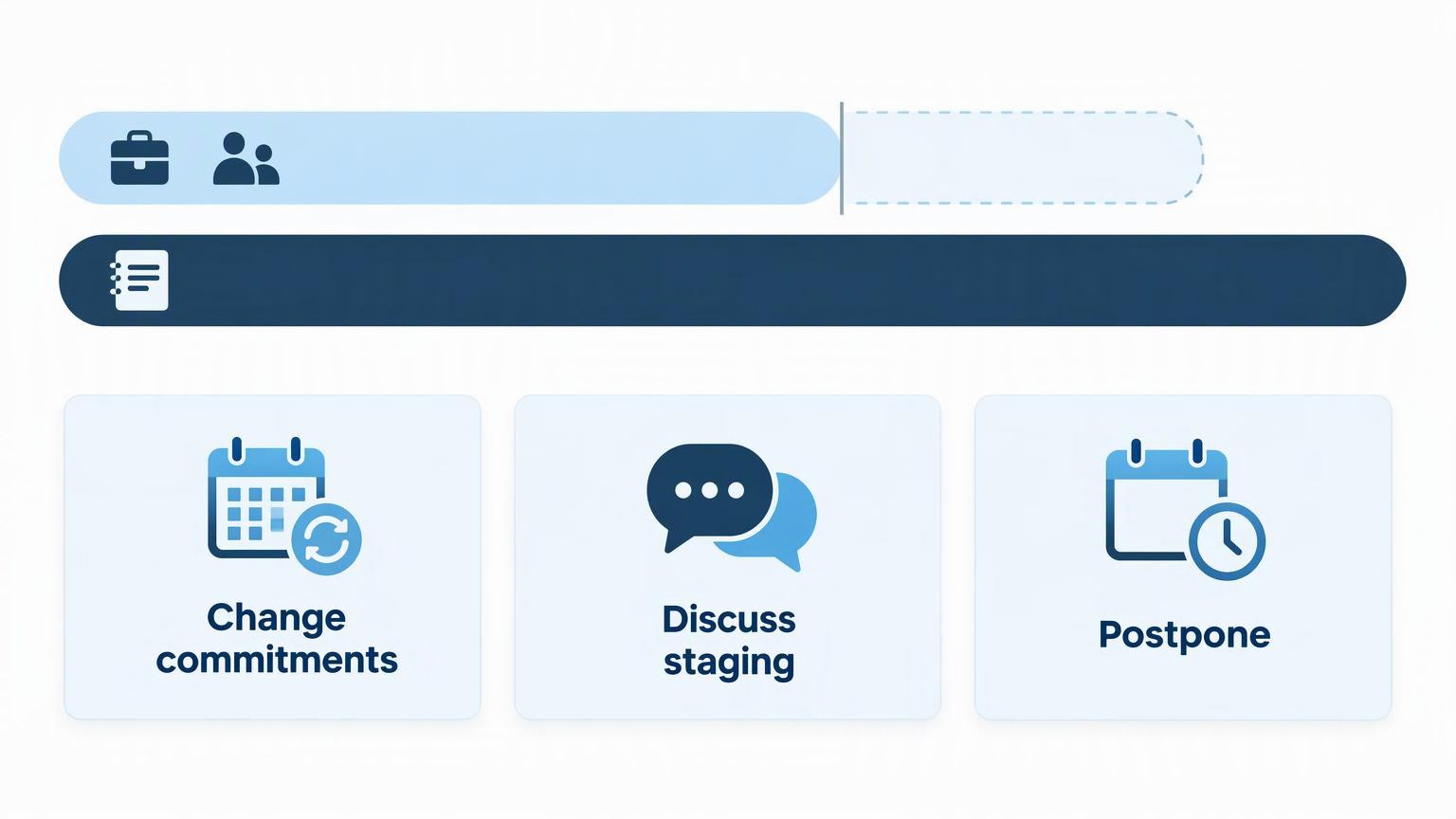
Turn the recommendation into travel and follow-up arrangements
Build travel around the clinician's examination, treatment and follow-up requirements. Flight timing and length of stay depend on that plan and your individual assessment, not a published package duration.
First, establish the required local appointments and how departure will be assessed. Then compare lodging and transport options against the clinician's instructions. A comfortable room is not a substitute for any clinical assistance the care plan requires.
Before committing, establish who handles routine follow-up after you return, how an in-person assessment would be arranged and which clinical contact provides urgent instructions. VIVE Plastic Surgery's breast augmentation travel guide likewise advises agreeing on who responds after return and when concerns require in-person assessment. That guidance does not establish another provider's arrangements.
Keep financial responsibilities separate. If a clinician recommends an extra hotel night, the purchase is still lodging. The recommendation does not establish who pays or whether the night is included. Supplier change, cancellation and refund terms determine contractual consequences; insurance coverage and claim conditions are a separate question.
Establish Hospitality Cancun's scope separately from clinical care
Use a later planning conversation to establish whether our services cover travel associated with these procedures and which tasks, if any, we would handle. Our travel and consultation-planning content is not a clinical recommendation.
Separate the proposed responsibilities: travel arrangements, clinical assessment and any introduction to a specifically named provider. Ask whether the business's service scope covers your proposed visit; do not assume that our contact section means surgery, appointments, quotations or referrals are available.
Once the recipient and purpose are clear, ordinary travel details can be discussed later with the confirmed travel contact. Clinical eligibility, the procedure sequence, recovery instructions and clearance to travel remain with the qualified treating clinician.
The useful outcome is a clear division of responsibilities. You can then decide which logistics to manage independently and whether any offered planning assistance addresses a task you actually need.
Frequently Asked Questions
How long after a BBL can I have breast augmentation?
Do not use a general waiting interval as permission to schedule. Ask the treating clinician which findings and reassessment would determine readiness for the next operation. The answer should explain both the proposed timing and what could delay it, rather than simply giving you a date.
Does a “mommy makeover” label settle which procedures I should have?
No package label settles your treatment choices. Ask for the exact procedures being proposed and a separate explanation of each one's purpose. If a tummy tuck or another procedure is added, request a fresh explanation of the overall plan rather than assuming the earlier recommendation still applies.
Should future breast implant care be part of this decision?
Yes, if implants are proposed. VIVE Plastic Surgery's guide notes that implants are not lifetime devices and includes monitoring and possible future surgery in initial planning. Ask your clinician to explain the proposed device, surveillance and future care responsibilities. That discussion is separate from whether to combine operations.
What happens to my deposit if the clinician changes the plan?
The applicable supplier's written terms determine the deposit's treatment; a clinical change does not automatically establish a refund right. Separate the surgical provider's terms from hotel and transport terms. Any insurance claim depends on the policy's coverage, exclusions and conditions, not merely the reason for changing plans.
What may I submit through the first inquiry form?
Clarify the recipient and purpose before submitting any information. The first submission allows only name, email and optional contact-method preference, with no narrative or attachments. Permission to reply, optional marketing and referral to a specifically named provider are separate choices. Discuss travel details later with the confirmed travel contact. Clinical records belong only in a named provider-confirmed secure channel; do not send payment details or insurance identifiers through a general inquiry.