

Care and Travel Planning
Learn how to separate clinical decisions, quoted services and travel commitments before choosing between proposals.
A care plan is more than a procedure name and a total. It connects an assessment, proposed treatment, follow-up and purchases from potentially different suppliers. This guide helps you compare those commitments without assuming that any procedure, package or provider relationship is available through Hospitality Cancun.
Which care plans can you meaningfully compare?
Compare proposals that describe equivalent work and are at the same assessment stage. If one is an initial estimate and another follows an individual consultation, their totals are not yet competing offers for the same purchase.
Start by aligning the named procedure, treatment areas, proposed extent and follow-up scope. A broad body-contouring label does not establish that these match. When clinicians recommend different approaches, resolve the clinical difference before treating the amounts as a price comparison.
Then compare the purchasing structure. An itemized bundle may suit you when its lodging and transport terms fit your needs. Separate arrangements may suit you when you want to select travel suppliers independently. Both can connect the trip successfully; the distinction is what each contract includes and how changes are handled, not simply the number of reservations.
The comparison below describes ways to evaluate proposals, not packages offered by a particular supplier. A preliminary estimate can help you organize questions, but it should not win a final selection merely because its starting amount is lower.
What should the consultation and provider information establish?
The consultation should establish who makes the clinical recommendation and what assessment still remains. A conversation with an administrator or travel contact is not an individual determination of eligibility, treatment suitability or recovery needs.
Look for a named treating clinician and the proposed treatment location. Verify claimed professional registration and relevant specialty certification with the issuing bodies rather than relying on a badge, testimonial or package description. Match the person's identity and specialty to the proposed work. Evaluate any facility accreditation claim separately; it does not establish the individual clinician's qualifications.
For the clinical discussion, prepare your goals and questions privately. Ask the qualified clinician to explain the recommendation, alternatives, risks and follow-up responsibilities. If the proposal is conditional on an examination or tests, keep that condition visible in your comparison rather than treating the advertised scope as settled.
Also distinguish an appointment request from a confirmed consultation. The latter needs a named provider and agreed arrangements. Hospitality Cancun publishes travel and consultation-planning guidance; that role does not establish clinical assessment or appointment-booking capability.
| Proposal | Suitable when | Trade-off |
|---|---|---|
| Itemized care-and-travel bundle | Listed travel services fit the clinician's plan and your preferences. | Convenience may come with less supplier choice; review component change terms. |
| Care quote with separately purchased travel | You want control over lodging and transport suppliers. | You manage separate contracts and their individual change consequences. |
| Preliminary estimate awaiting assessment | You are deciding whether to pursue consultation, not commit to treatment. | Scope and total may change; defer final price ranking. |

How do you compare quoted inclusions and total cost?
Compare what each amount purchases before comparing the amount itself. A procedure-only quote and a quote containing lodging are different baskets of services, even when both use the same treatment label.
Use a compact inclusion checklist for each proposal:
- Clinical scope: consultation, proposed procedure, clinician and facility charges, anesthesia, tests, medications and follow-up, where applicable.
- Travel scope: lodging, transport and any companion arrangements expressly listed.
- Boundaries: exclusions, duration limits, currency, quote validity and items awaiting assessment or pricing.
Mark each item as included, separately priced, excluded or awaiting clarification. A missing price does not mean an item is free. Add confirmed medical and travel amounts without counting a bundled item again. Keep possible changes outside that baseline total unless the proposal actually prices them.
If a follow-up visit is included, identify its scope and period rather than assuming unlimited aftercare. If transport is listed, establish which journeys it covers. The useful result is a comparable baseline plus identifiable exposure, not a falsely precise estimate that fills blanks with assumptions.
How can follow-up change the travel decision?
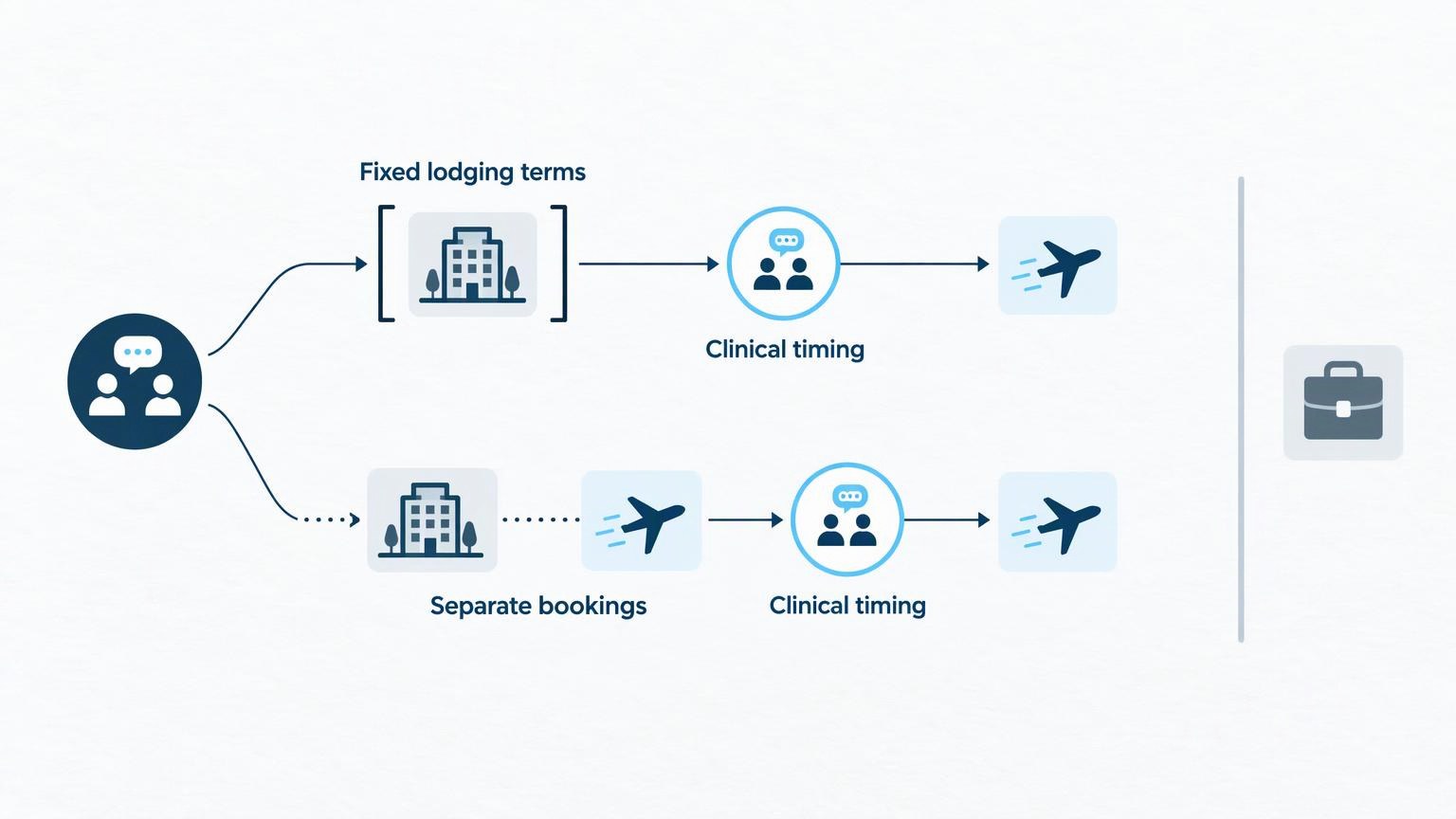
Build the itinerary around the clinician's actual consultation and follow-up plan, not a package's advertised stay. Flight timing and length of stay depend on that plan; a fixed number of nights is not individual clearance to fly.
Say you have a firm work commitment after your intended return. One proposal bundles lodging through a fixed checkout date. Another separates the care quote from travel, allowing you to choose lodging and flights with suitable change terms. The treating clinician has not yet established when the final in-person review should occur.
The bundle is convenient only if its dates and extension terms accommodate the eventual plan. Separate bookings offer control only if the chosen supplier terms genuinely permit the adjustments you need. Neither solves the problem if your work commitment prevents the necessary stay. In that case, postponing the trip is more workable than forcing care into the available window.
Once clinical timing is established, compare transport by the actual appointment and departure requirements. Choose lodging for the practical needs identified in the care plan, rather than assuming a vacation-oriented stay supplies clinical support.
Who pays when plans change, and where does insurance fit?
Payment responsibility comes from the applicable proposal, supplier contracts and insurance policy, not merely from the reason for a change. Keep the service purchased, the event causing the change and the payer separate.
For example, if a clinician directs a longer stay, an extra hotel night remains a lodging charge. That clinical instruction does not establish whether the night is included, who pays, whether the hotel permits an extension or whether insurance covers it. The applicable written proposal, supplier terms and insurance policy must answer those questions.
Before committing, read each supplier's cancellation, refund and change provisions. Identify deposit treatment, applicable deadlines, repricing and the consequences if clinical assessment changes the proposed care. With separate suppliers, one supplier's cancellation does not itself resolve the other reservations.
Insurance is a separate layer. Trip-cancellation, medical and evacuation coverage require their own assessment of covered events, exclusions, eligibility and claim conditions. Do not assume a policy covers elective treatment or consequences associated with it. An insurer's potential payment is not a substitute for understanding what the supplier owes under the purchase contract.
How do you hand off the plan without mixing roles?
Prepare a private comparison sheet, then separate the clinical discussion from the travel discussion. Keep proposal versions, open pricing items and your personal travel limits together so you can see what still prevents a decision.
Before submitting any information through Hospitality Cancun's contact section, clarify the recipient and purpose. Once those are clear, the first submission is limited to name and email, with an optional contact-method preference. Do not include travel details, proposal text, a planning narrative, clinical records, payment details, insurance identifiers or attachments.
Later, ordinary dates, lodging needs and companion arrangements may be discussed with the confirmed travel contact. Diagnoses, scans and clinical records belong only in a named provider-confirmed secure channel.
Permission to respond to your requested inquiry, optional marketing permission and permission for referral to a specifically named provider are separate choices. A requested reply is not marketing consent.
The specialist handoff should leave clinical suitability and follow-up with the treating clinician, while travel discussions address the itinerary those decisions require. Do not treat travel guidance as evidence that a particular procedure or introduction is available.
Frequently Asked Questions
Should a before-and-after gallery decide which proposal I choose?
No. Images do not establish your eligibility, the scope of your proposed care or the terms of your purchase. Use them as a topic for discussion with the clinician, not a promise of your result. Your comparison still needs individual assessment and clearly identified responsibilities.
Can a companion replace the support listed in a care plan?
Do not assume so. A companion's travel availability and willingness to help are separate from any clinical support the treating clinician requires. Have the clinician define those requirements, then evaluate whether the arrangements meet them. A shared hotel room alone does not establish that required care is provided.
What if the consultation changes my original treatment request?
Treat the revised recommendation as a new basis for comparison. Obtain the updated scope and associated charges before relying on the earlier proposal. Revisit travel timing and existing commitments as well. A change in recommendation does not automatically establish refund rights for deposits or other purchases already made.
How should I compare proposals written in different languages?
Compare terms you can understand accurately, especially exclusions, conditions and payment obligations. Request clarification of ambiguous wording from the party issuing the proposal. For clinical consent, resolve understanding with the treating provider. A translated promotional summary should not replace the actual care explanation or purchase terms.
What should I prepare for continuity of care after returning home?
Discuss the handoff with the treating clinician before committing. Establish how you will obtain the care summary and follow-up instructions, and who handles later clinical questions. If another clinician is expected to provide care at home, confirm that arrangement rather than assuming someone will accept the role.