

Consultation and Travel Planning
Separate the clinical proposal from the travel offer so you can compare responsibilities, costs and practical commitments.
A search result can describe an implant procedure, a hospital, or a travel package without explaining how they fit together. Your goal is not simply to collect advertised prices. It is to establish what you are choosing, who is responsible, and whether the arrangement works before making financial commitments.
Start with comparable proposals, not a ranked shortlist
Search first for an identifiable breast augmentation provider in Cancun, then examine its consultation process and package scope. Use directories to discover names, not to establish suitability. Search each candidate's full name separately and locate its own explanation of who performs surgery and where.
Next, separate procedure-focused offers from travel bundles. PlacidWay's Cancun package page lists hotel accommodation, airport transfers and daily ground transportation as exclusions. In contrast, Riviera Plastic Surgery Center's medical-travel page describes packages covering hotel accommodation and airport transfers. These are descriptions to investigate, not interchangeable promises.
That difference changes your next step: with a procedure-focused offer, price the travel separately; with a bundle, establish the lodging and transport scope before assigning value to the package. Neither format establishes better clinical care. Keep candidates with identifiable clinical parties and understandable scope; pause those whose attractive headline cannot be connected to a specific proposal.
Verify the surgeon and the actual surgical facility
Verify the clinician and facility separately. A surgeon's credential does not establish a hospital's status, and a hospital's accreditation claim does not establish the qualifications of everyone practicing there.
Obtain the proposed surgeon's full professional name, claimed specialty credential, issuing organization and identifying details needed to confirm that credential with its issuer. Match the identity to the person expected to perform your procedure. A logo or the phrase “board-certified” without a named board is not enough to complete that comparison.
For the facility, distinguish the consultation location from the surgical site. Establish the site's legal name and address, then match any license or accreditation claim to that exact facility and its current scope. Do not transfer a credential from a hospital group to an unnamed location.
The practical result is a clear decision: matching, independently confirmable information supports proceeding to clinical discussion; mismatched names or an unidentified operating site mean you need more information before choosing. Also establish which clinical party handles anesthesia, postoperative concerns and escalation, rather than assuming a travel contact holds those responsibilities.
| Option | Suitable when | Reason | Trade-off |
|---|---|---|---|
| Procedure-focused proposal with separate travel | You want to select lodging and transport yourself. | Travel costs and supplier terms can be compared independently. | You handle separate reservations and their changes. |
| Proposal bundling clinical care and travel | The offered lodging and transport suit the clinical plan. | A specified bundle may reduce separate purchasing tasks. | Value depends on actual inclusions and component-specific terms. |
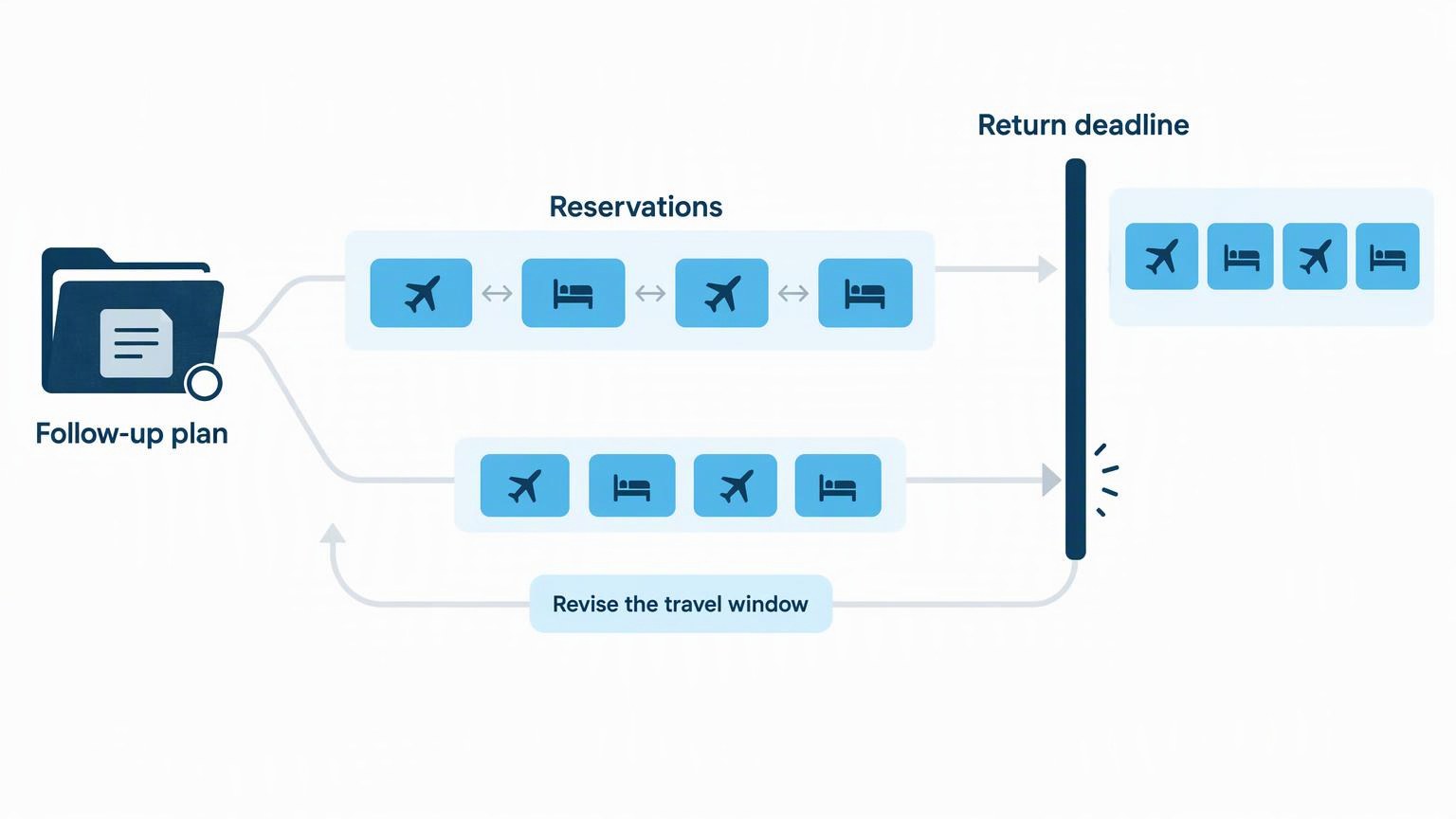
| Consultation before travel commitment | Suitability, surgical site or follow-up has not been established. | You avoid committing travel funds before key decisions are settled. | Your preferred travel window may need revision. |

Let the clinical consultation define the procedure
The treating clinician should determine eligibility, procedure suitability, implant recommendations and recovery advice. Your role is to understand the recommendation and its alternatives, not to select a technique from a package menu.
Prepare your goals and questions privately. During the provider-confirmed clinical consultation, discuss the proposed implant, placement and incision approach, why they are recommended, relevant risks, and alternatives, including not proceeding. If an additional procedure is proposed, its rationale and charges need separate explanation rather than being absorbed into a larger package label.
Identify which decisions are still pending. An early conversation may leave examination, testing or other clinical decisions outstanding; the clinician should explain what is needed before the plan becomes final. That distinction matters when deciding whether to make travel commitments.
The useful output is a clinical plan you can understand: proposed care, outstanding decisions, follow-up arrangements and who will advise you about travel readiness. A generic statement about returning to light activity does not establish your ability to fly, work or manage alone after surgery.
Compare full quotes and separate contracts from insurance
Compare quotes only after their clinical scope is equivalent. A lower total may reflect excluded services rather than a lower charge for the same care.
Use one compact comparison checklist: surgeon and implant charges; anesthesia and facility charges; required evaluation, medication and follow-up; lodging and transport; exclusions; currency and payment schedule; cancellation, refund and change terms. Mark anything unstated as needing clarification, not included.
Before paying, identify the contracting party and payee for each component, obtain the applicable terms, and reconcile them with the proposal. A clinical provider, hotel and airline may have separate obligations even when their services appear in one presentation. Establish what happens if the procedure is postponed or does not proceed, including the treatment of deposits and unused travel services. Do not assume every supplier follows the same cancellation rule.
Insurance is a separate comparison. Cancellation, medical and evacuation coverage depend on the actual policy's covered events, exclusions and claim conditions. Coverage does not create a supplier refund obligation. Likewise, an extra hotel night remains a lodging charge even if a clinician recommends it; that cause alone establishes neither inclusion nor who pays.
Test the travel plan against your real return deadline
Arrange flights and lodging around the clinician's assessment and follow-up plan, then test how reservations would change if that plan changes. No fixed stay length should substitute for individual travel advice.
Say you have a firm work return date, but the final postoperative review has not been scheduled. One travel arrangement offers restrictive reservations; another allows changes under stated terms. The first may be workable once the clinical schedule is settled. The second offers flexibility, but its change conditions and potential costs still matter.
If the care plan cannot fit your work deadline, a changeable ticket does not solve the underlying conflict. Revise the travel window or defer. If the window does fit, compare the financial consequences of moving the flight and extending the hotel rather than automatically buying the most flexible option.
For an extension, identify the extra lodging service, the event prompting it and the payer separately. Without applicable terms, you cannot determine inclusion, payment responsibility, hotel cancellation consequences or insurance coverage. Changing reservations is a logistics task; any need for nursing or clinical support must come from the care plan.
Keep the planning handoff separate from clinical decisions
Use travel conversations for reservations and logistics, and a named treating provider for clinical decisions. Hospitality Cancun publishes travel and consultation-planning guidance; its contact section is not an appointment confirmation or a clinical recommendation.
Before submitting any information, establish who will receive it and the purpose of collection. If either is unclear, clarify it first. The first submission is limited to name and email, with an optional contact-method preference. Do not add dates, destination, companion details, room needs, a narrative or attachments.
Later, once recipient and purpose are clear, ordinary travel details can be discussed with the confirmed travel contact. Diagnoses, scans and clinical records belong only in a named provider-confirmed secure channel. Payment details and insurance identifiers do not belong in a general inquiry; they are not clinical records.
Keep permission to reply to your requested inquiry, optional marketing, and referral to a specifically named provider as separate choices. Agreeing to a reply is not marketing consent or permission for an unnamed referral.
Frequently Asked Questions
Can before-and-after photos tell me which implant will look most realistic?
Photos can help communicate preferences, but they do not establish which implant or approach suits you. Bring your appearance goals to the treating clinician and ask how the recommendation relates to your individual assessment. Do not treat another person's image as a promised result or a substitute for consultation.
Should I choose the cheapest advertised option?
Not from the headline alone. First establish equivalent clinical scope and add excluded travel expenses. Then compare the identified provider, facility, follow-up responsibilities and financial terms. A cheaper complete proposal may deserve consideration, but an incomplete advertised total cannot establish either value or suitability for your needs.
Does a travel package include a caregiver?
Do not infer caregiving from hotel accommodation, transfers or general coordination. Establish whether any support service is actually offered, what tasks it covers and who provides it. Whether you need a companion, nursing or other clinical assistance must follow the treating clinician's plan, not the package's travel amenities.
Can I add sightseeing to the same visit?
Do not build activities into the postoperative schedule before discussing them with the treating clinician. A destination itinerary and a care itinerary serve different purposes. Keep optional travel plans separate from required appointments, and evaluate their cancellation terms without assuming you will be able to participate after surgery.
What should I arrange for follow-up after returning home?
Before departure, establish the treating provider's follow-up instructions, contact route and escalation plan. If local follow-up is proposed, identify the clinician and confirm that arrangement rather than assuming a US provider has accepted responsibility. Keep the care plan accessible to you and share clinical records only through provider-confirmed secure channels.