

Consultation and Travel Planning
Build your visit around the provider's review and follow-up requirements, then decide which travel arrangements are ready to become firm.
The useful distinction is between starting preparation and making a commitment. You can research providers, organize questions privately and examine travel options before choosing a departure date. This guide helps you turn those early steps into a calendar without treating a consultation slot, hotel reservation or package description as confirmation of treatment.
Start early, but choose dates according to readiness
Begin preparation now if care in Cancun is a serious possibility; choose firm travel dates only when the appointment purpose and necessary timing are clear. A universal recommendation to book a set number of weeks ahead would not account for your provider's review process.
If you have not had that review, the productive early work is provider research and consultation preparation, not buying a nonchangeable flight. If you have a confirmed consultation, you can plan around that consultation without assuming treatment will follow during the same visit. Once the treating clinician has established the relevant schedule, travel comparisons become more meaningful.
The comparison below shows what each level of readiness supports. These are planning stages, not promises of availability. Starting earlier gives you room to resolve unanswered questions; it does not establish eligibility or shorten a clinical process.
Complete provider review before building a treatment itinerary
First identify who would assess and treat you, then establish what their review must resolve before a treatment date can be considered. Travel research cannot answer those clinical questions.
Start with the provider's own information to identify the clinician and proposed facility. Verify relevant professional registration and any claimed specialist credentials with the issuing authority. Match the name and credential to the person who would actually provide care, rather than relying on a general clinic description.
Next, arrange the provider's consultation or review process through a confirmed channel. Ask the provider to distinguish an available consultation from an offered treatment date and explain whether further assessment is needed before scheduling. Eligibility, diagnosis and treatment suitability remain with the qualified treating clinician.
The result changes your next decision. A consultation-only offer supports a consultation itinerary. If further assessment is needed, leave treatment dates open. An established clinical plan gives you the sequence needed to begin mapping arrival, appointments and follow-up.
| Your situation | Suitable next step | Reason | Trade-off |
|---|---|---|---|
| No provider review yet | Prepare for consultation; leave travel dates open | The appointment purpose and care timeline remain open | You cannot yet settle treatment travel dates |
| Consultation confirmed, treatment undecided | Plan a consultation-only visit if its timing is established | The trip has a defined purpose without assuming treatment | Later treatment may require another visit |
| Clinical sequence established | Compare travel around that sequence | Arrival and follow-up requirements can guide the itinerary | Reservations still need suitable change terms |

Build the travel calendar from the clinical sequence
Use the provider's appointment and follow-up sequence to establish the visit window, then search flights and lodging within it. Do not start with a preferred vacation length and compress the care plan to fit.
Keep a private timing worksheet with these details to confirm with the provider:
- What review or preparation must be completed before travel.
- The appointment's purpose, date, local time and location.
- Whether treatment is scheduled separately from consultation.
- The follow-up sequence and how it affects the stay.
- The clinician's advice about departure and flying.
Work backward from the first required appointment to determine arrival using the provider's instructions. Work forward through follow-up to identify a possible departure window. A planned return date is not individual clearance to fly.
Then compare travel options against that window: does the arrival fit the instructions, and does the return accommodate the clinical sequence? Use the actual appointment address when evaluating lodging and transport. Keep leisure plans outside required appointments and subject to the clinician's activity advice.
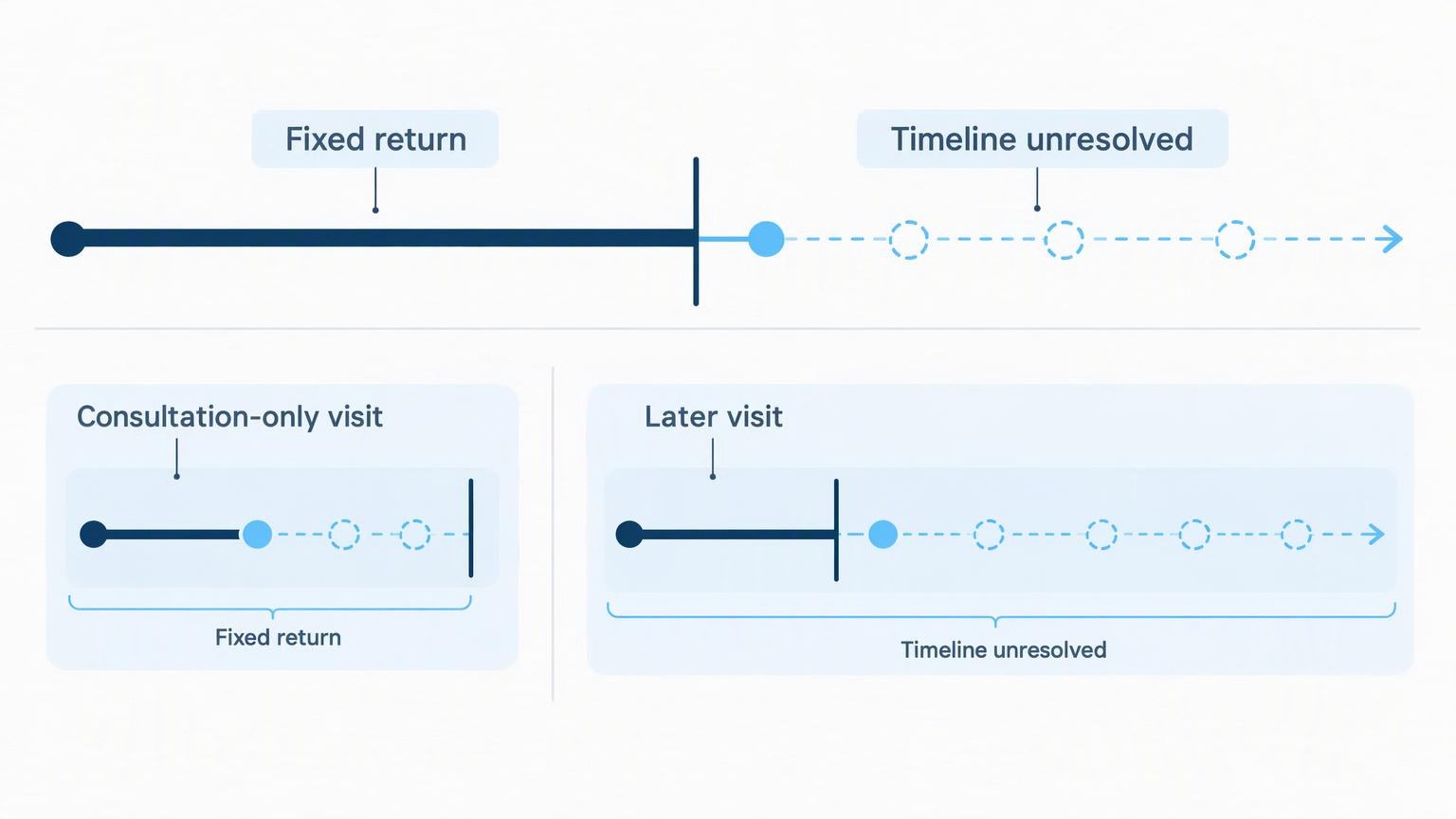
If your return date is fixed, test the visit before booking
If your return deadline is fixed but the care timeline is not yet clear, wait to commit to treatment travel rather than shortening follow-up.
Say you can travel during approved leave, but you must return when that leave ends. A provider offers a consultation within the window but has not established whether treatment or follow-up would fit. You are considering booking the entire trip now or waiting for the review.
Booking now commits travel around an assumption. Waiting lets the provider determine whether the proposed visit fits. A consultation-only trip is another option if its purpose and travel timing are confirmed, but it may mean a separate visit for any later treatment.
The reasoned choice is to avoid committing to treatment travel until the review resolves the timeline. If the clinician confirms that the full sequence fits, compare travel for that window. If it does not, choose a later visit or a consultation-only plan rather than interpreting your leave deadline as medical clearance.
Before paying, compare what happens if dates change
Compare the consequences of a changed date alongside the initial travel price. A workable itinerary can still leave you exposed to costs if its reservations cannot accommodate a revised schedule.
For each reservation, read the supplier's cancellation, refund and change terms before payment. Establish applicable deadlines, any charges, whether a refund or credit is available, and how amendments are requested. Do not assume that a medically prompted change creates refund rights.
For example, if a clinician advises a longer stay, an additional hotel night remains a lodging service. The clinical advice explains why the plan changed; it does not establish who pays, whether the night is included or which hotel terms apply. You cannot determine those details unless the applicable written agreement answers them.
Insurance is separate. Cancellation, medical and evacuation coverage have their own covered events, exclusions and claim conditions. A supplier's obligation comes from its terms; an insurer's payment depends on the policy. Compare both rather than treating insurance as a replacement for flexible reservations.
Use a planning conversation for the travel questions that remain
Hospitality Cancun publishes travel and consultation-planning information relevant to adults considering care in Cancun. Use that guidance to organize the travel questions that remain; clinical scheduling and suitability belong with the treating provider.
Before submitting any information through the contact section, clarify who will receive it and for what purpose. Once those details are clear, the first submission is limited to name, email and an optional contact-method preference. Do not add dates, trip details, narrative or attachments.
Ordinary travel details may be discussed later with the confirmed travel contact. Keep requested-inquiry replies, optional marketing and referral to a specifically named provider as separate permission choices. Permission to reply is not marketing consent.
Diagnoses, scans and clinical records belong only in a named provider-confirmed secure channel. Do not send payment details or insurance identifiers through a general inquiry. Opening the contact section does not itself confirm an appointment, provider relationship or referral acceptance.
Frequently Asked Questions
Can a remote consultation reduce the amount of travel I need?
It may help clarify whether an in-person assessment is needed before treatment planning, but do not assume it replaces an examination or guarantees fewer visits. Ask your chosen provider whether remote review is available and what decisions it can support. Its value depends on which questions still need answers afterward.
Should a companion use the same travel dates as me?
Base any support requirement on the clinician's actual care plan, then arrange the companion's travel around that role. A companion's different departure date is a logistics issue unless it conflicts with required support. Keep their availability in your private planning notes for later discussion with the confirmed travel contact.
Should I reserve sightseeing before the consultation?
Avoid committing to activities that depend on treatment timing or your ability to participate afterward. Leave them undecided until the provider has explained the relevant activity restrictions. A free afternoon on the calendar does not establish that an excursion is appropriate, and a leisure reservation should not displace follow-up.
How should I handle appointment times in travel confirmations?
Record the appointment in the provider's stated local time and label it clearly. Compare flight arrival information and other confirmations on the same basis before arranging transport. If a message omits the time basis, resolve that ambiguity with its sender rather than assuming every calendar entry uses your home time.
Does a package description tell me whether everything fits one visit?
No. A package label alone does not establish the clinical sequence or confirm that all appointments fit one stay. Compare its stated travel components with the provider's actual schedule, including any separate visits. Only explicit terms establish what is included; do not infer lodging, transfers or additional nights.