

Consultation and Travel Planning
Turn competing proposals into a like-for-like comparison of treatment scope, travel spending and responsibility for care.
Your budget needs to cover the plan you would actually purchase, not just the amount advertised for surgery. Use this guide to build a private comparison worksheet, identify proposals that remain incomplete and decide what deserves further discussion before paying a deposit.
Start by matching the procedures, not the package name
Quotes are comparable only when they describe equivalent proposed treatment. A label such as “full mommy makeover” does not tell you whether both proposals include the same breast procedure, abdominal procedure or liposuction areas.
Copy each proposed procedure into its own worksheet row. A breast lift in one proposal and breast augmentation in another should remain different entries, not disappear under a shared “breast surgery” heading. Where implants are proposed, preserve their specifications rather than treating every option as interchangeable.
For example, Evoclinic's published package guide lists breast augmentation and/or breast lift alongside other possible procedures, anesthesia, facility use and postoperative items. That is the clinic's description of possible package components, not evidence that your individual quote includes them.
If the scope differs, compare the proposals as different plans, not competing prices for the same purchase. The treating clinician determines suitability and whether procedures should be combined; adding procedures simply to make a package appear better value is not a budgeting decision.
Build a comparable total for bundled and separate services
An itemized bundle and separately purchased services can both be workable. Choose between them by comparing total planned spending and responsibility for each component, rather than assuming “all-inclusive” is more complete or independent booking is less expensive.
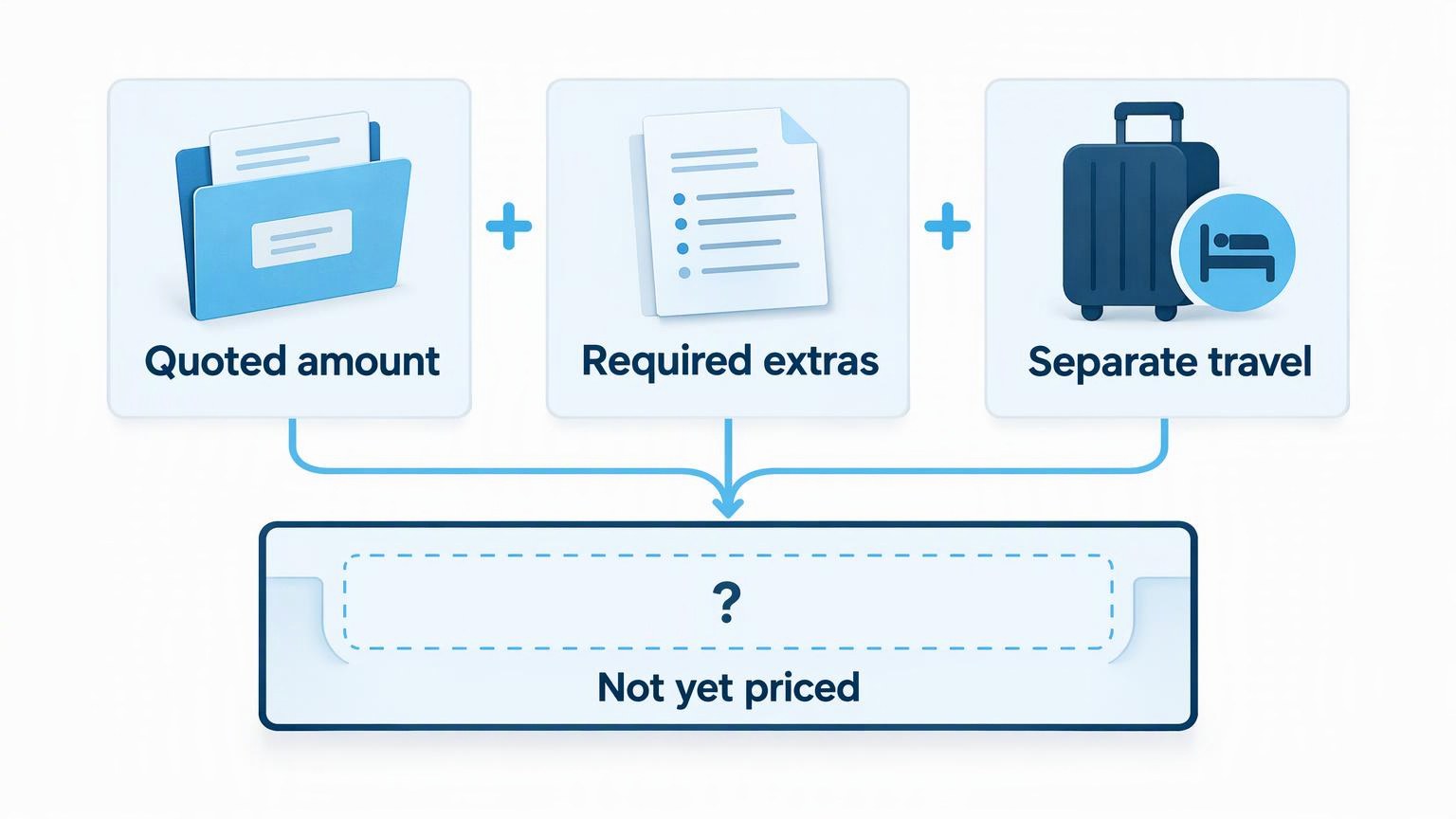
For each proposal, calculate: quoted amount plus required excluded services plus separately booked travel. Do not add lodging twice if it is already included. Label unknown amounts “not yet priced,” rather than entering zero. A total with required items still unpriced is incomplete, even if the arithmetic looks precise.
Use one compact checklist for variable details:
- Procedure scope, surgeon, anesthesia and operating-facility charges.
- Tests, implants where applicable, prescribed supplies and follow-up services.
- Lodging, meals, transport and any separately charged assistance.
- Currency, applicable taxes or payment charges, and quote expiration.
- Excluded services and the amount or basis for each additional charge.
Record each item's status as included, separately priced, excluded or awaiting clarification. This exposes the actual difference between proposals without requiring either a bundle or separate reservations to win.
| Quote Structure | Suitable When | Reason | Trade-Off |
|---|---|---|---|
| Itemized bundle | Its defined services match your proposed care and travel plan. | Included components can be compared against separate purchases. | Unused inclusions may not add value; extension terms still matter. |
| Medical quote with separate travel | You can price suitable lodging and transport independently. | Travel choices remain visible and separately selectable. | You must combine totals and review each supplier's terms. |
| Package with unclear inclusions | Not ready for a price-based decision. | Required services and exclusions cannot yet be valued. | Clarification is needed before ranking it against complete proposals. |
Evaluate who provides care and who handles travel
A clear price does not establish a clear care arrangement. Identify the treating surgeon, operating facility and follow-up provider separately from the hotel, recovery accommodation or travel contact.
Before treating a proposal as a serious option, verify the clinician's professional and specialty credentials with the relevant issuing authority. Review the operating facility's authorization for the proposed surgery separately. A lodging listing, package description or marketing badge is not a substitute for those checks.
Read “postoperative support” as an unfinished description until the proposal identifies the service, who performs it, where it happens and whether it is included. A room, meal service or ride does not establish nursing care or clinical monitoring. Any clinical support requirements must come from your actual care plan.
Follow-up should address both the stay in Mexico and the period after returning home: the responsible provider, communication method, scheduled reviews and route for urgent concerns. Keep the clinician's decisions about stay length and flight timing separate from accommodation availability. Included nights are a purchased allowance, not individual clearance to fly.

Work through a stay-extension comparison
A possible stay extension can prevent you from determining whether a cheaper-looking quote actually costs less, but it does not automatically make a bundled package preferable.
Say you have proposals for the same clinician-approved procedures. The lower headline quote excludes accommodation; the higher quote includes a defined stay. Both identify follow-up arrangements. Your choice now depends partly on the separately priced lodging and the extension terms, not just the surgical amounts.
Compare the lower quote plus lodging against the bundled total. If the first remains lower and its lodging arrangement fits the care plan, it may be the better budget choice. If the bundle costs more, judge whether its specified inclusions justify that difference rather than assigning value to an unexplained package label.
Now suppose the clinician directs you to remain longer. An additional hotel night is still a travel service, even though a clinical decision caused it. The applicable documents must establish who pays, whether the night is included, which hotel terms apply and whether insurance covers it. Without those answers, you cannot allocate that potential cost.
The outcome is to clarify extension exposure before choosing, not infer that either provider absorbs the cost.
Read payment, cancellation and insurance terms separately
Before paying, distinguish what each supplier owes under its agreement from what an insurer might reimburse under a separate policy. Medical reasons for changing a trip do not, by themselves, establish a refund or insurance entitlement.
Read the terms for each relevant event: you cancel, the provider postpones, the clinician revises the proposed procedures, or travel bookings must change. Identify the affected service, the payment already committed, the refund or credit rule, and any additional amount due. Surgical, hotel and airline terms may need separate entries.
For insurance, evaluate cancellation, medical and evacuation coverage against the exact planned trip. Review exclusions relating to elective treatment, covered reasons, deductibles, authorization requirements and claim documentation. A policy name alone does not establish coverage, and possible reimbursement does not resolve a supplier's immediate payment requirement.
Finally, map the deposit and balance deadlines to the consultation and final-plan stages. Identify the contracting supplier and payment recipient before transferring funds. If an estimate can change after assessment, understand how that affects your commitment to both treatment and travel bookings.
Prepare the handoff without sending the whole worksheet
Keep your comparison worksheet private while deciding which questions belong with the treating provider and which belong with a confirmed travel contact. Hospitality Cancun publishes travel and consultation-planning guidance; clinical suitability, recovery advice and treatment decisions belong with the qualified treating clinician.
Before submitting any information through Hospitality Cancun's contact section, clarify the recipient and purpose. The first submission is limited to name, email and optional contact-method preference. Do not include the worksheet, trip details, a narrative or attachments. Ordinary travel details may be discussed later with the confirmed travel contact once the recipient and purpose are clear.
Permission to reply to your requested inquiry, optional marketing permission and permission for referral to a specifically named provider are separate choices. A requested reply is not marketing consent.
Diagnoses, scans and clinical records belong only in a named provider-confirmed secure channel. Do not send payment details or insurance identifiers through a general inquiry. Preparing a budget does not require disclosing these records, and a travel-planning conversation does not replace the provider's clinical assessment.
Frequently Asked Questions
Can an online average tell me whether my quote is fair?
An average cannot establish the value of your individual proposal because it may combine different procedures, facilities and inclusions. Use it only as background, not a spending target. A more useful benchmark is another sufficiently detailed proposal for equivalent scope, with excluded costs added and any missing prices kept visible.
Does a larger discount mean better value?
No. A discount measures a reduction from a stated reference price, not whether the final proposal fits your needs. Compare the final amount, included services and contractual obligations. Do not count services you would not purchase as savings, or assume a promotional price establishes provider quality.
How should I compare quotes in different currencies?
Keep each supplier's original currency visible, then convert the totals using the same exchange-rate basis for your worksheet. Distinguish that planning conversion from the amount actually payable. Establish which currency the supplier requires and whether payment-provider conversion charges apply before treating the converted total as your final outlay.
Should a revision promise count as financial protection?
Only to the extent its written terms identify the covered service, conditions, time limits and exclusions. A revision promise should not be treated as coverage for every complication or additional trip. Separate any stated surgical provision from possible anesthesia, facility, lodging and transport charges before assigning it budget value.
What if the final consultation changes the procedure list?
Rebuild the comparison using the revised clinician-proposed scope rather than relying on the earlier package total. Identify which charges change and whether previous payments remain applicable under the agreement. Revisit travel arrangements if the revised care plan affects them; do not preserve the original itinerary simply because it was already budgeted.