

Travel planning after care
Your flight home should follow the treating clinician's plan, the follow-up timeline, and a clean handoff to care after you return.
Returning smoothly depends on three choices: whether the treating clinician says travel is appropriate, whether any follow-up must happen before departure, and how the next care team will get needed records. Hospitality Cancun publishes travel-planning guidance for adults considering care-related trips to Cancun or the Mexican Caribbean, so this guide covers logistics and handoffs, not medical advice.
A return ticket is a reservation, not permission to fly
No. A return ticket shows only that you booked transportation. Clearance to travel comes from the treating clinician, who decides whether your care, restrictions, and any remaining review support the trip home.
The CDC's medical tourism guidance notes that flying after surgery can raise blood clot risk and gives general waiting guidance for some major operations. Those timelines are not your personal discharge decision.
Use the ticket as a movable reservation until discharge instructions and follow-up results support departure.
Follow-up appointments set your earliest realistic departure window
Follow-up appointments can set the earliest realistic departure window. If a required review has not happened, your return date is still provisional because that visit may confirm travel, change restrictions, or show that you need more time locally.
Plan backward from the last required checkpoint. Ask what visit must happen before departure, what result could change the plan, and who will handle the next step after you land. That is why a tight same-day airport transfer after a review can be fragile.
If follow-up can happen after you return, you have more freedom. If one more in-person check is required in Mexico, book departure after that visit.
| Situation | Suitable return arrangement | Reason | Trade-off |
|---|---|---|---|
| Departure timing is already confirmed after the final required review | A tighter return flight and room schedule | There is less uncertainty left for the itinerary to absorb | You have less room if the plan changes unexpectedly |
| A final in-person check will decide whether you can travel | A changeable flight plus a room that can be extended | The travel date can follow the clinician's result instead of forcing it | More flexibility can cost more upfront or come with different fare rules |
| You expect a quick follow-up soon after landing in the United States | A return plan with buffer before any onward connection or next-day obligation | Delays, document handoff, and fatigue are less likely to disrupt the next step | The trip home may take longer or require an extra overnight |
| A companion may need to stay if you are told not to travel yet | Separate the companion's and patient's booking terms when possible | One person's change does not automatically reprice the entire trip | You have more reservations to manage |

The records that should move directly are the ones the next clinician must rely on
Send directly whatever the receiving clinician must rely on: the procedure or treatment summary, discharge instructions, medication list, and any test results or imaging needed for follow-up. Those records let the next team work from documented facts instead of memory.
The CDC Travelers' Health medical tourism guidance says to get copies of your records before returning home. The CDC Yellow Book adds that overseas records may need English translation and should be shared with later clinicians. When possible, arrange transfer between the treating team in Mexico and the named U.S. clinician or practice that will see you next, and keep your own copy.
Do not send diagnoses, scans, lab results, insurance numbers, payment details, or attachments through a general website inquiry. Clinical records belong only in the secure channel named by the receiving provider.
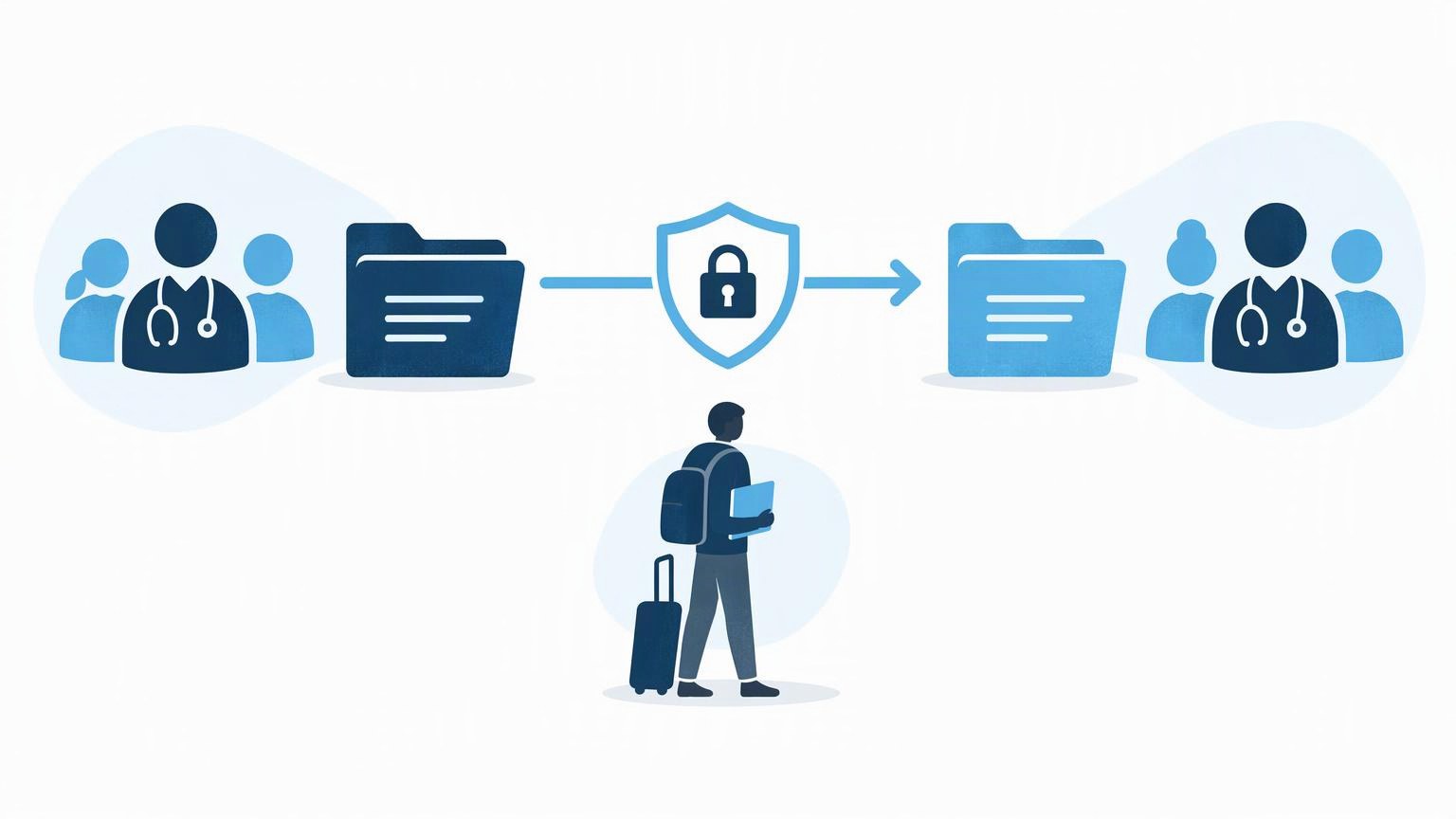
Before you return, separate insurance for care, transport, and changed travel plans
Before you return, separate insurance and contract questions by job. Ask whether your health plan covers care abroad, whether it covers follow-up or complication-related care after you return, whether you have medical evacuation coverage, and what your airline and hotel allow if dates change.
The U.S. Department of State separates travel health, medical evacuation, and trip cancellation insurance, and notes that trip cancellation coverage usually does not pay medical costs abroad. The CDC warns that follow-up care after complications may be expensive and may not be covered.
Keep the service, trigger, and payer distinct. A clinician-directed extra hotel night is still lodging. Refunds, changes, and coverage depend on the written supplier and policy terms you bought.
Flexible flights and lodging reduce disruption by absorbing uncertainty
Flexible flights and lodging reduce disruption because they give you room to react if the timeline changes. They do not replace clearance to travel, but they can keep one delayed review or record handoff from unraveling the whole return plan.
If the final review is complete, a tighter itinerary may work. If one last visit or handoff is still pending, fixed bookings leave less room to adapt.
Worked example: one unresolved review changes the better booking choice
Imagine the clinician wants one more review before departure, and your U.S. follow-up office will not confirm an appointment until records arrive. A fixed flight with a prepaid same-day checkout leaves little margin. A changeable fare plus an extendable room is the better fit because it lets the clinical decision happen before the travel plan locks in.
Frequently Asked Questions
Can I book my return before treatment if I choose a flexible fare?
Yes, if you treat the booking as provisional until discharge and follow-up are clear. A flexible fare makes date changes easier, but it does not turn a booked seat into medical clearance or guarantee that you can leave on that date.
Do I need my records translated into English before I leave Mexico?
Maybe. The CDC Yellow Book says overseas records may need English translation before later clinicians can use them easily. If your U.S. follow-up depends on those documents, ask about translation and delivery before you leave Mexico rather than after you land.
What if my U.S. clinician will not schedule follow-up until records arrive?
Plan the handoff before departure. Identify the receiving office, confirm its secure record-delivery method, and request the discharge record set early enough to avoid scheduling delays caused by missing documents or translation needs once you are back in the United States.
Does trip cancellation insurance cover treatment, evacuation, and changed flights?
Usually not all of them. The State Department separates trip cancellation insurance from travel health and medical evacuation coverage, and trip cancellation policies generally do not pay medical costs abroad. Read each policy for the service covered, the event that triggers payment, and the exclusions.
Can I use a general website inquiry to send reports or explain my case?
No. If the recipient or purpose is unclear, clarify that first. When a first travel-planning inquiry is appropriate, keep it to your name, email, and optional contact-method preference. Clinical records belong only in a named provider-confirmed secure channel for follow-up care.