

Cross-Border Care Planning
Use the same evidence standards for each provider, then compare how the proposed care fits your travel, time, and financial limits.
Start with specific proposals, not a national winner. A surgeon's profile, clinic advertisement, and travel package answer different questions. Keep them separate so lodging or a headline price does not replace evidence about who would treat you, where, and what happens afterward.
Compare specific options, not countries
Prioritize a local US option if returning for care without another trip is your main constraint. Keep a Mexico option under consideration if its provider, facility, and clinician-directed follow-up can be established and the schedule fits. Neither country alone establishes quality.
Compare actual access: a distant US surgeon can also require flights and lodging. Self-managed reservations are a reasonable alternative when you understand the care schedule and can arrange the necessary logistics.
Build a private comparison sheet covering provider identity, operating facility, evaluation, follow-up access, complete cost, and missing information. Mark unknowns plainly rather than scoring them favorably. Screen for credentials and practical feasibility before comparing amenities. If required appointments cannot fit your availability, package features do not solve the mismatch.
Verify the surgeon before ranking the offer
Start with the surgeon's full professional name and exact claimed credential. Seek confirmation from its issuing authority, not only the clinic biography.
In either country, search the name with the claimed license or certification, identify the issuer, and use its official verification resource where available. Match the name and credential identifier to the proposed surgeon. Record the status and date shown. If the match is unclear, you have not established the claim; that does not necessarily mean it is false.
Check a license, specialty certification, association membership, and training course separately for what each issuer confirms. One does not establish another.
Then assess consultation fit: can the surgeon explain your goals, proposed approach, limitations, and follow-up? Eligibility and treatment suitability remain clinical decisions. A travel planner or appealing profile cannot determine them.
| Situation | Option to prioritize | Reason | Trade-off |
|---|---|---|---|
| Limited leave and a suitable provider accessible from home | Local US care | Follow-up can fit without a separate trip | Provider, facility, and cost still need evaluation |
| A suitable US candidate also requires flights and lodging | Compare both travel-based options | Domestic care does not eliminate travel dependencies | Both plans need workable timing and change terms |
| A Mexico candidate passes verification and its care schedule fits | Continue cross-border evaluation | The option is practically feasible enough to compare further | International travel and after-return care remain separate tasks |
| Required follow-up cannot fit your availability | Modify the plan or postpone | An itinerary cannot override clinical requirements | Delaying may be preferable to committing to an unworkable schedule |

Identify the operating facility and its responsibilities
Identify the exact name and location of the operating facility. It may differ from the consultation office or the property pictured in an advertisement.
For authorization or accreditation claims, use the issuer's verification resource to match the facility, current status, and stated scope. A website logo is a starting point, not confirmation. The surgeon's credential does not establish facility status.
Map responsibilities next: who provides anesthesia, handles postoperative clinical questions, and responds if care needs exceed the setting's capabilities? Seek named actors and concrete steps rather than a general promise of support.
This separates the care plan from hospitality. A room, ride, or companion does not establish clinical monitoring. Any required clinical support must follow the treating clinician's plan, with its responsible provider, nature, and duration identified separately from travel services.
Test the follow-up plan against your travel limits
Build the trip around the treating clinician's evaluation and follow-up schedule. Length of stay and clearance to fly are individual clinical decisions, not deductions from package nights or recovery calendars.
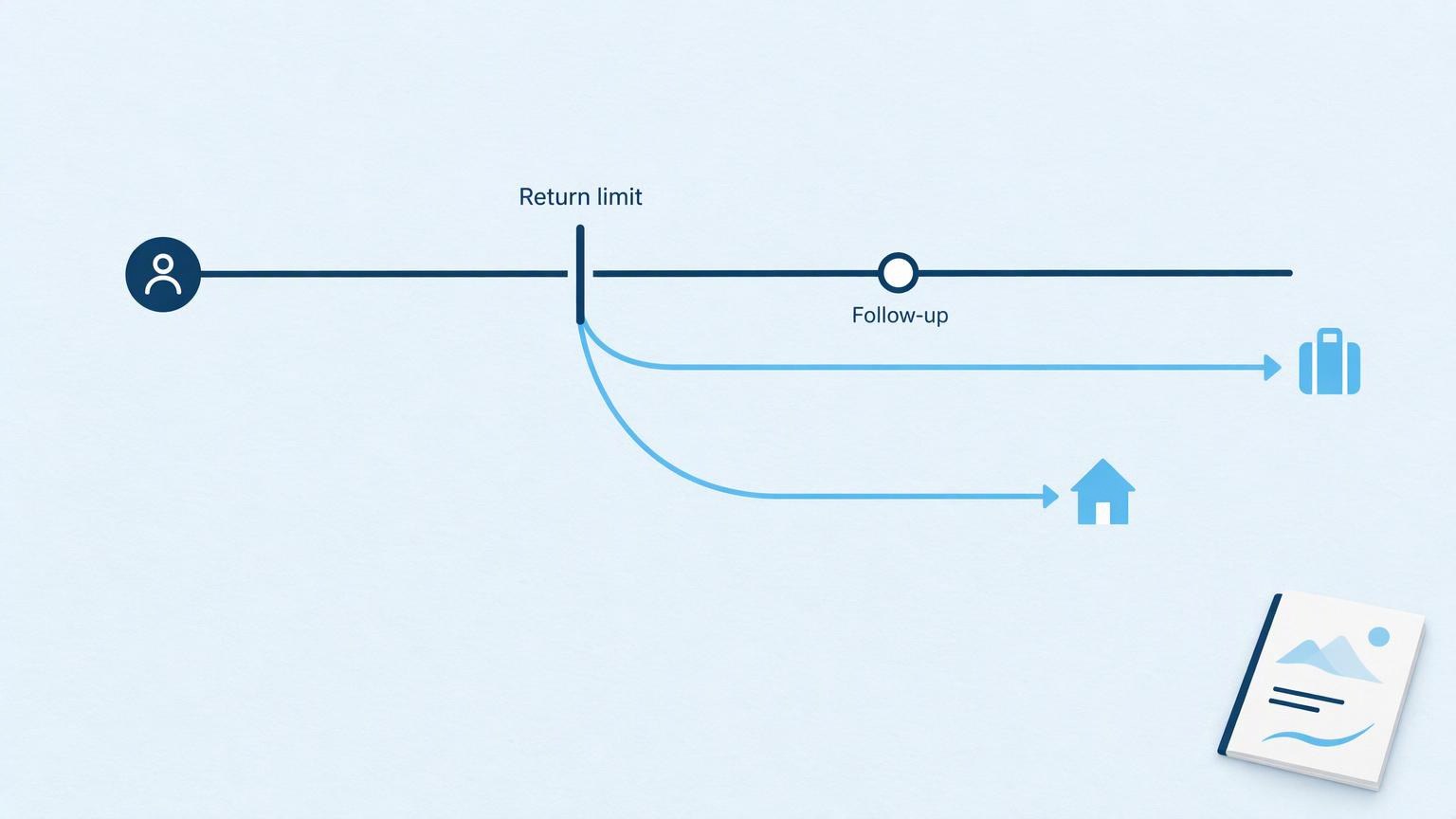
Suppose your work schedule imposes a firm return deadline, and a Mexico clinician proposes an in-person review after it. A US candidate is accessible from home. Your alternatives are to change your leave, discuss another clinical plan, or continue evaluating local care. An earlier flight does not resolve the conflict without an acceptable clinical alternative. If leave cannot change, local care is more workable, provided it passes the other checks.
Then search flights around the clinical sequence, comparing connections, change conditions, and arrival and departure windows. Compare lodging for appointment access and clinician-specified needs. Before committing, review current official entry requirements for your citizenship and itinerary, plus airline conditions.
Establish who handles concerns after your return and where any needed in-person assessment would occur. Do not assume a clinician at home has accepted that role.
Compare complete costs and the terms for changes
Compare equivalent services, not a surgical fee against a bundled total. Separate clinical charges from flights, lodging, transportation, and companion expenses.
Keep one financial checklist: currency and quote validity; inclusions and exclusions; payment recipient and schedule; follow-up charges; supplier cancellation, refund, and change terms; and responsibility for extra expenses. Unpriced does not mean free.
A clinician-directed extra hotel night remains a lodging charge. Its clinical cause establishes neither who pays nor whether it is included. The proposal and hotel contract determine those answers and the applicable change terms. For changed flights or additional clinical visits, likewise identify the service and its payment terms.
Insurance is separate. Evaluate cancellation, medical, or evacuation coverage using the policy's scope, exclusions, and claim conditions. It does not replace supplier obligations. A lower initial total may not remain cheaper when charges or payment responsibilities are still unknown.
Keep travel planning separate from clinical decisions
Hospitality Cancun publishes travel and consultation-planning guidance. Keep diagnosis, surgical suitability, recovery instructions, and travel clearance with your treating clinician.
Establish the contact recipient and purpose before submitting any information. The first submission permits only name and email, with optional contact-method preference. Do not include trip details, narrative, attachments, clinical records, insurance numbers, or payment information.
Permission to reply to your inquiry, optional marketing consent, and referral permission for a specifically named provider are three separate choices. A requested reply authorizes neither marketing nor referral.
Later, after recipient and purpose are clear, discuss ordinary travel details with the confirmed travel contact. Diagnoses, scans, and medical records belong only in a named provider-confirmed secure channel. A general inquiry is not a medical consultation, and travel planning does not establish clinical acceptance.
Frequently Asked Questions
Can before-and-after photos establish whether a surgeon is right for me?
Use photos to discuss your goals, not predict your result. Explain what you like or want to preserve, then discuss relevance to your case with the clinician. Photos cannot replace credential checks, facility information, an individual assessment, or a follow-up plan.
What if a listing uses the term ethnic rhinoplasty?
Treat the label as a discussion prompt, not evidence of suitability based on identity. During consultation, explain which features you want to preserve or change. Judge how the surgeon addresses your individual priorities rather than accepting the category as proof of expertise.
Should I choose an open or closed technique before comparing providers?
Learn the terminology, but leave technique selection to clinical evaluation. Compare how surgeons explain their proposed approach and its limitations for your case. An advertised technique should not be your sole search filter before a clinician has assessed your individual suitability.
How much weight should I give patient reviews?
Use reviews to identify issues to investigate, such as communication or billing clarity. They do not verify credentials, facility status, or suitability for you. For a recurring concern that affects your decision, seek a concrete explanation from the responsible provider rather than relying on ratings.
Does a written estimate mean surgery is confirmed?
An estimate confirms surgery only if the provider's documents explicitly establish that status. Separate pricing from clinical acceptance, scheduling, and the agreed procedure. Before paying, understand what payment reserves and which terms apply if evaluation changes the proposed plan for your care.