

Care Research
Learn to separate what a patient experienced from what a rating, recommendation or testimonial cannot establish.
A review can describe a welcoming consultation, satisfaction with appearance, confusing instructions or difficulty reaching someone afterward. Those are different subjects, even when they appear under the same rating. Your task is to identify which experience matters to your decision and whether the writer actually describes it.
This guide evaluates review content, not individual Tijuana surgeons or clinics. It does not rank providers or recommend treatment.
Which reviews deserve more weight?
Give a review more attention when it describes a relevant firsthand experience and separates events from opinions. A detailed account is more useful for research, but detail alone does not prove authenticity or clinical quality.
Look for the writer's role. Someone describing their own consultation can speak to that interaction. A companion may describe communication or assistance they witnessed. A person recommending a surgeon because someone else was pleased is offering secondhand information, not their own care experience.
Then identify the subject. “The staff explained who to contact afterward” describes a process. “Everyone was amazing” expresses satisfaction without explaining why. Neither establishes a surgeon's credentials or whether a procedure is suitable for you.
Use the comparison below to decide what an account can contribute. A brief review need not be dismissed as false; it simply leaves less to evaluate. Conversely, a long account may still leave the provider, procedure or sequence unclear.
How should you search for relevant accounts?
Start broadly to identify names, then narrow your search to the exact provider and the experience you need to understand. Searching only “Tijuana plastic surgery reviews” can leave you comparing unrelated procedures and clinic-level impressions.
Search the provider's full name with Tijuana and the procedure you are researching. If a result names only a clinic, establish which clinician the writer means before attributing the experience to a surgeon. If the procedure is absent, keep the account separate from procedure-specific comparisons.
Next, add a relevant term such as consultation, follow-up or communication. This moves the search from general satisfaction toward the specific question you still need answered. Read the full account when available, including updates, rather than relying on a search preview.
Compare accounts across more than one place where reviews appear. If identical wording reappears, count it as the same account unless there is a reason to treat it differently. Repetition across websites is not automatically independent corroboration.
| Account type | Useful for | Limit |
|---|---|---|
| Relevant firsthand account with a clear sequence | Identifying specific experiences to compare | Does not establish authenticity, credentials or suitability |
| Brief positive or negative rating | Understanding the writer's overall impression | Leaves the reason and context unclear |
| Companion's account | Understanding interactions the companion witnessed | Cannot stand in for the patient's clinical experience |
| Secondhand recommendation | Finding a name for further research | Does not describe the writer's own care |
How does review timing change the comparison?
A review is most useful when its timeline matches the question you are trying to answer. An account posted after a consultation can describe that consultation, but it cannot describe follow-up that has not happened.
Separate the posting date from the experience date. An old experience posted recently does not become evidence of current arrangements. An updated review may add useful context, so read what changed rather than treating the newest rating as the whole story.
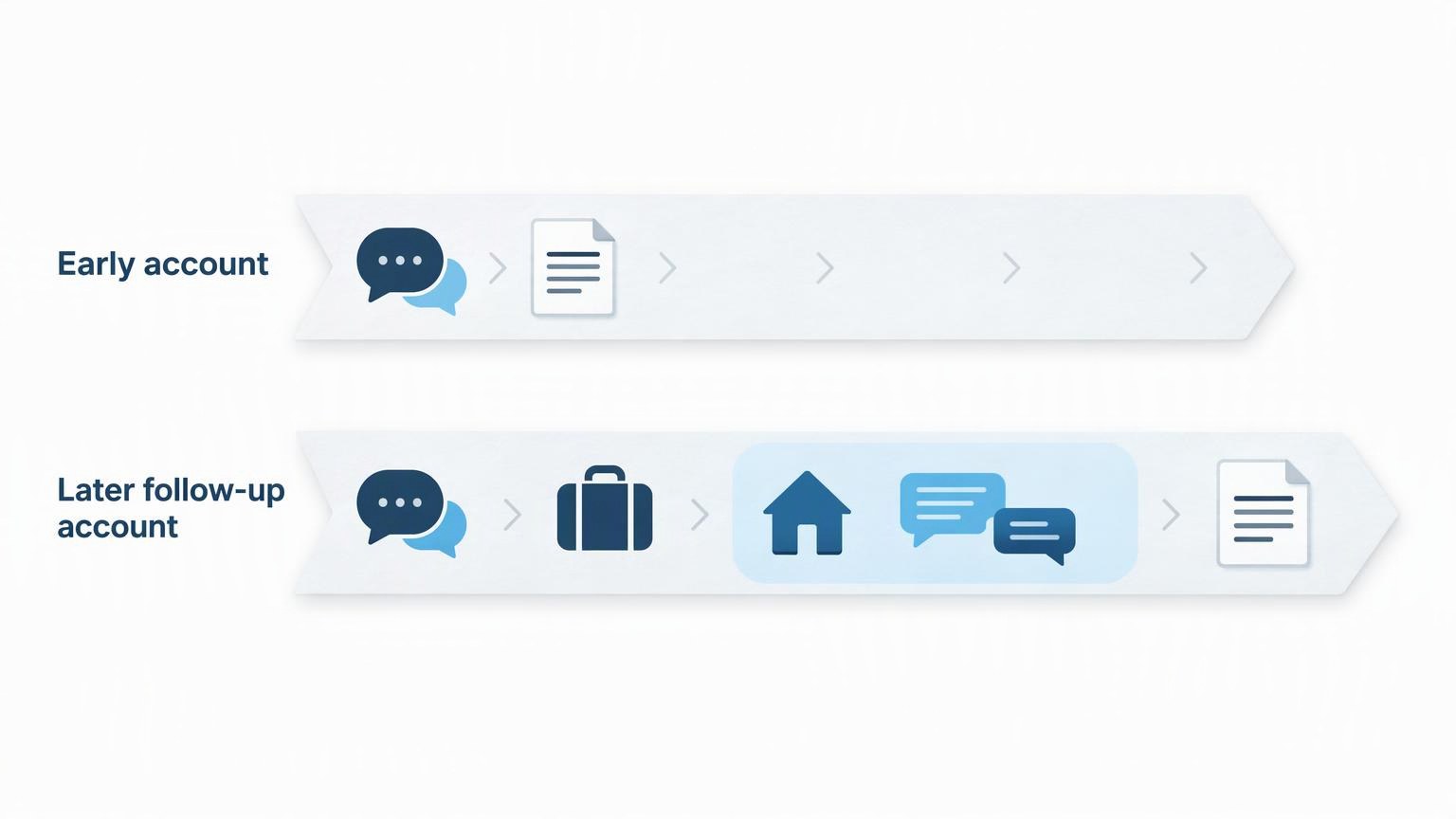
Say you are concerned about reaching the clinical contact after returning home. You find an enthusiastic account written before the writer left and a mixed account that describes later attempts to obtain clarification. The first emphasizes hospitality; the second explains what happened when help was requested.
For your concern, the later account provides the more relevant research lead, despite its less positive tone. The outcome is not to select or reject the provider immediately. It is to obtain a clear explanation of follow-up responsibility. Neither writer's travel schedule establishes when you could leave or fly.
What should you do with conflicting reviews?
Compare the events behind conflicting ratings before deciding that the accounts contradict each other. A positive review of appearance and a negative review of communication can both describe different parts of an experience.
Sort observations by subject: consultation, clinical care, communication, travel arrangements or billing. Do not average them into a single judgment. A pleasant room does not answer a concern about follow-up, and dissatisfaction with a booking change does not by itself establish poor surgical care.
Look for independently described patterns. Several accounts explaining the same difficulty reaching a clinical contact create a specific issue to investigate. Several vague statements that a clinic is “bad” leave the issue unidentified. A provider response may explain its position, but it does not independently resolve the facts.
Keep clinical interpretations separate from reported events. “I sent a message and received no answer” describes an interaction. “That proves negligence” is a conclusion the account alone cannot establish. Preserve the useful observation without adopting an unsupported verdict.
What needs evidence beyond testimonials?
Credentials, individual treatment suitability and current service obligations require evidence outside reviews. A patient's satisfaction cannot verify professional status, facility accreditation or the terms another patient would receive.
For credential research, obtain the clinician's full professional name and the exact credential claimed. Match it to the relevant issuing authority's official information, including the specialty and any stated validity conditions. A testimonial calling someone “board-certified” is a lead to investigate, not the verification itself.
For clinical decisions, take questions about eligibility, diagnosis, procedure suitability and recovery to the qualified treating clinician. Ask how the actual care plan handles follow-up and clinical concerns after departure. Someone else's review cannot supply your clearance to travel.
For logistics or package claims, use the current written proposal and applicable supplier terms. Praise for an “all-inclusive” experience does not establish your inclusions. Supplier change or cancellation terms and insurance coverage are separate matters; a review cannot determine either.

When have reviews done enough for your research?
Reviews have done enough when they help you identify a relevant experience and a specific next question. You do not need to keep reading indefinitely to reach a star-based verdict.
Keep this compact checklist privately for each account you may use:
- Identity: Which provider, clinic and procedure does it actually identify?
- Perspective: What did the writer personally experience or witness?
- Timeline: When did the experience occur, and what stage does the account cover?
- Observation: What happened, apart from the writer's interpretation?
- Next action: Does it inform comparison, require clarification or lack relevance?
If the account is relevant and specific, retain it as context. If it raises an issue that needs clarification, investigate that issue before committing. If it is unrelated or too vague, set it aside without labeling it fraudulent.
Hospitality Cancun publishes travel and consultation-planning guidance focused on Cancun and the Mexican Caribbean. Its contact section is relevant only if you are also considering that focus, not as a route to Tijuana surgical care.
Frequently Asked Questions
Do before-and-after photographs make a review more reliable?
Photographs may help you understand what the writer is discussing, but they do not establish who performed a procedure, when the images were taken or what care occurred between them. Treat them as part of the account, not independent proof of quality or a prediction of your result.
Should I ignore a review written anonymously?
Not automatically. An unnamed writer may still describe a clear, relevant experience, while a named writer may offer only praise. Assess what the account explains and what remains unverified. Do not try to uncover private medical information to validate it, and do not treat anonymity alone as evidence of deception.
Does an incentive mean a review is false?
An incentive does not by itself prove that an account is false, but it is relevant context for weighing it. Look for any disclosed relationship, reward or promotional role. Keep concrete observations separate from recommendation language, and avoid treating promotional enthusiasm as independent evidence of clinical quality.
Is a clinic-selected testimonial the same as an independent account?
No. A testimonial selected for a clinic's website represents what the clinic chose to display. It may describe a genuine experience, but it does not show the full range of patient accounts. Use it for the details it contains without assuming the selection represents everyone who received care.
Can I send my review notes through Hospitality Cancun's first contact form?
No. Before submitting any information, clarify the recipient and purpose. First contact permits only name, email and optional contact-method preference. Requested replies, optional marketing and referral to a specifically named provider are separate choices. Clinical records belong only in a named provider-confirmed secure channel, not the general inquiry.