

Cross-Border Care Planning
Compare specific proposals on equal terms, then test whether their travel and follow-up arrangements work for you.
A country label cannot tell you what a proposal includes or who will handle your care after departure. Keep a comparison sheet for each actual provider, separating established details from unanswered items. You are choosing a care arrangement, not just a destination. Eligibility, procedure selection and recovery guidance belong with the qualified treating clinician.
Which option fits your access and travel needs?
Favor a provider you can readily revisit if access to in-person follow-up is your strongest requirement. A Mexico option deserves consideration when its provider information, care plan and travel demands meet your standards. Neither country is automatically the better value.
Compare actual locations and arrangements. Surgery in the USA is not necessarily local: traveling to a USA provider can still require lodging, time away and a return journey for review. Conversely, a Mexico proposal should not be rejected or accepted simply because it crosses a border.
Use the comparison below to identify your practical starting point. Then apply the same evidence standard to every candidate. A convenient location does not replace provider verification, and a comprehensive-looking package does not establish clinical suitability. If neither proposal offers workable follow-up, postponing the choice is more useful than selecting the more appealing headline price.
How do you make the quotes comparable?
Match the clinician-proposed procedure and included services before comparing totals. A quote for a different surgical scope is not an equivalent offer, even when both use the label “tummy tuck.” Have the clinicians explain any differences rather than choosing a technique by price.
Evoclinic's cost guide identifies procedure extent, anesthesia and postoperative care among cost factors. That supports comparing components, not treating its advertised country-level ranges as your personal estimate.
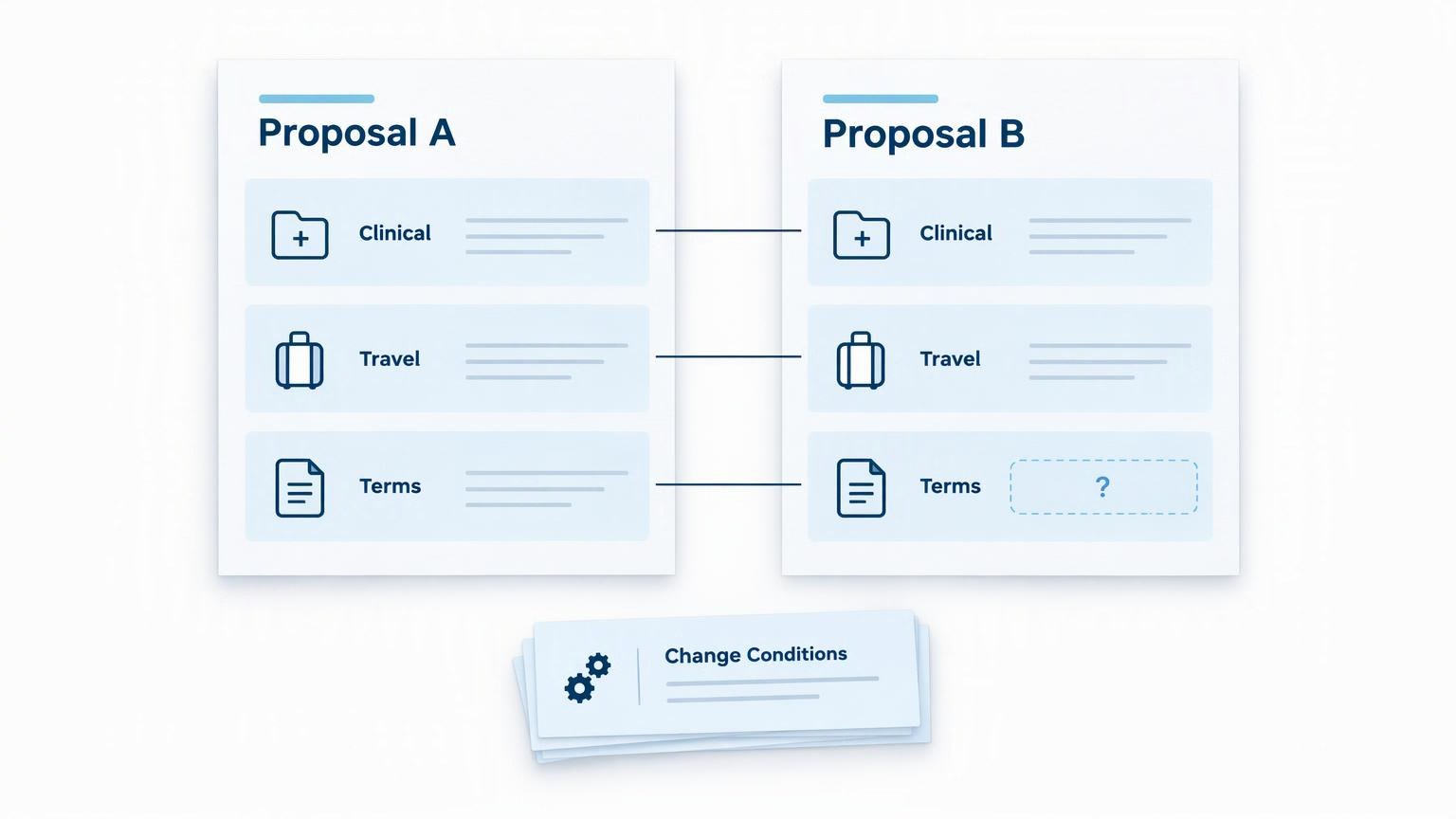
Organize each proposal into:
- Clinical services: proposed procedure, surgeon, anesthesia, facility, tests and scheduled reviews.
- Travel services: transportation, lodging and any separately described planning service.
- Financial details: currency, inclusions, exclusions, payment schedule and quote validity.
Mark an unspecified charge as unknown, not zero. Add separately obtained travel estimates to the quoted clinical total. Keep possible change costs separate from the baseline so you can see both the expected expense and the exposure if the plan changes.
| Option | When it may fit | Trade-off |
|---|---|---|
| USA provider near home | Practical access to repeated in-person reviews is a priority. | Convenience does not establish credentials or complete quote scope. |
| USA provider requiring travel | The specific provider and care plan justify time away. | Lodging, transport and return visits still need budgeting. |
| Mexico provider requiring travel | Verified provider details and the care itinerary fit your circumstances. | Cross-border travel and post-return care need explicit arrangements. |
What provider information deserves independent verification?
Verify the named operating surgeon and exact surgical facility, not just the brand selling the proposal. A coordinator's reputation or a clinic's attractive presentation does not establish the credentials of the person performing surgery.
Start your search with the surgeon's full professional name and the jurisdiction where the operation would occur. Obtain the claimed license and specialty credential details, then locate the relevant issuing authority's own verification instructions. Compare names, specialty descriptions and any stated validity information. A badge or membership label should not be treated as interchangeable with a license or specialty certification.
Next, match the facility's legal name and address to the proposed operating location. If accreditation is claimed, identify its issuer and scope rather than assuming it covers every site or service.
A mismatch changes the next decision: resolve it before retaining the candidate on your shortlist. Separately, have the treating provider explain who supplies anesthesia, how urgent concerns are assessed and what arrangements apply if a higher level of care is needed. Credentials do not answer those operational questions.

How should you build travel around the care plan?
Build the itinerary around the clinician's assessment and follow-up plan, not around an attractive return fare. Flight timing and length of stay are individualized; a published recovery period is not personal clearance to fly.
First establish the required consultation, preparation and review appointments with the treating provider. Next identify which appointments must be in person and what determines readiness to depart. Only then search transportation for an itinerary that accommodates those requirements.
Compare usable flights by arrival and departure windows, connections and change conditions, rather than fare alone. For lodging, compare the stay required by the plan, access arrangements and reservation flexibility. Obtain route-specific travel information before selecting a property; do not assume a listing's location description establishes practical access.
Keep travel tasks separate from clinical support. A driver provides transportation, not postoperative assessment. A companion's availability may affect your itinerary, but the clinician determines any required care support. If your available time cannot accommodate the plan, change the travel window, consider another suitable provider arrangement or defer the trip.
What if the clinician recommends a longer stay?
A longer stay can change the financial comparison, but the reason for extending it does not determine who pays. Test this possibility before accepting reservation terms.
Say you are comparing a Mexico proposal with a USA provider near home. Both describe comparable clinical services, but the Mexico option requires a hotel and flight. You have limited flexibility in your time away. Before departure, the treating clinician recommends remaining longer for another review.
The additional hotel night is still a lodging service. Whether it is included, what it costs and who bears that charge depend on the applicable proposal and hotel terms. The clinician's recommendation alone establishes none of those points. The flight change has its own supplier conditions, and an additional clinical review may have separate billing terms.
Compare extending the trip with arranging care near home, but only where the clinicians consider the alternative appropriate. If you cannot accommodate the longer stay, the near-home option may fit better despite a less appealing initial quote.
Read supplier cancellation, refund and change terms separately from insurance. Cancellation, medical and evacuation coverage depend on the actual policy's exclusions and claim conditions; insurance does not rewrite a hotel's or provider's contract.
Who takes responsibility for follow-up after you return?
Choose an arrangement that identifies who handles routine reviews, concerns needing prompt assessment and any necessary return visit. “Follow-up included” is incomplete unless it explains the service, responsible clinician and limits.
Before committing, have the treating provider distinguish remote contact from in-person examination and explain when each is appropriate. If another clinician is expected to provide care after your return, establish that clinician's acceptance rather than assuming your usual provider will take over. Clarify how relevant records will reach the receiving clinician and how additional services are billed.
This can change your choice even when the quotes otherwise match. A proposal requiring a return journey may not fit your work or caregiving commitments; a nearby option may make repeat access more practical. Neither arrangement eliminates the need for an explicit care plan.
At Hospitality Cancun, we publish travel and consultation-planning guidance for adults considering care in Cancun and the Mexican Caribbean. Our travel-planning contact section is separate from your provider's clinical follow-up arrangements. Procedure suitability, clinical follow-up and clearance to travel remain with the qualified treating clinician.
Frequently Asked Questions
Can I use online price ranges to set my budget?
Use them only as an early research cue, not as a payable estimate or evidence that one country costs less for you. Published ranges may describe different procedures and inclusions. Base your decision budget on comparable provider proposals, separately priced travel and clearly identified unknown costs.
Do before-and-after photos prove a provider is right for me?
No. Photos may help you discuss aesthetic goals, but they do not verify credentials, explain your individual risks or establish the follow-up arrangements you would receive. Ask the clinician to explain how your proposed procedure relates to your goals. Keep that discussion separate from judging the presentation of a gallery.
Should I choose a bundled package over separate bookings?
Choose based on transparent scope and workable terms, not the bundle label. Separate bookings can fit a straightforward itinerary, while a bundle may group useful services. Identify who contracts for each component and what happens when one changes. Do not assume bundled lodging includes clinical monitoring or unlimited extensions.
Can a travel-planning contact decide whether I am a candidate?
No. Eligibility and treatment suitability require assessment by the qualified treating clinician. A travel discussion can address logistics later with a confirmed travel contact, but it cannot replace clinical evaluation. Clinical records belong only in a secure channel confirmed by the specifically named provider, not a general planning form.
What belongs in a first Hospitality Cancun inquiry?
Clarify the recipient and purpose before submitting any information. The first submission allows only name, email and optional contact-method preference. Travel details may be discussed later with the confirmed travel contact. Permission to reply, optional marketing and referral to a specifically named provider are separate choices. Do not submit records, payment details, insurance identifiers or attachments.